More than 1,500 request amnesty under new Venezuela law / Photo: Pedro MATTEY - AFP/File
More than 1,500 political prisoners in Venezuela have applied for amnesty under a new law, the head of the country's legislature said Saturday, two days after the measure -- enacted under pressure from Washington -- came into effect.
"A total of 1,557 cases are being addressed immediately, and hundreds of people deprived of their freedom are already being released under the amnesty law," National Assembly chief Jorge Rodriguez told a press conference.
Amnesty is not automatic under the law: petitioners must ask the court handling their cases.
On Saturday alone, 80 prisoners had been freed from detention in the capital Caracas, Rodriguez told AFP.
On Friday, the lawmaker overseeing the amnesty process, Jorge Arreaza, announced that prosecutors had asked courts to free 379 prisoners.
Venezuela's interim president Delcy Rodriguez -- the sister of the top lawmaker -- pushed for the legislation after she rose to power following the capture of leftist leader Nicolas Maduro during a US military raid on January 3.
The legislature unanimously adopted the landmark amnesty law on Thursday, and Delcy Rodriguez hailed its passage, describing it as a step toward "a more democratic, fairer, freer Venezuela."
Opposition figures have criticized the new legislation, which appears to include carveouts for some offenses previously used by authorities to target Maduro's political opponents.
It explicitly does not apply to those prosecuted for "promoting" or "facilitating...armed or forceful actions" against Venezuela's sovereignty by foreign actors.
Rodriguez has leveled such accusations against opposition leader and Nobel peace laureate Maria Corina Machado, who hopes to return to Venezuela at some point from the United States.
The law also excludes members of the security forces convicted of "terrorism"-related activities.
But the amnesty extends to 11,000 political prisoners who, over nearly three decades, were paroled or placed under house arrest.
"The law provides for those substitute measures to be lifted so that these people can enjoy full freedom," Rodriguez told reporters.
- 'Let's hope it's true' -
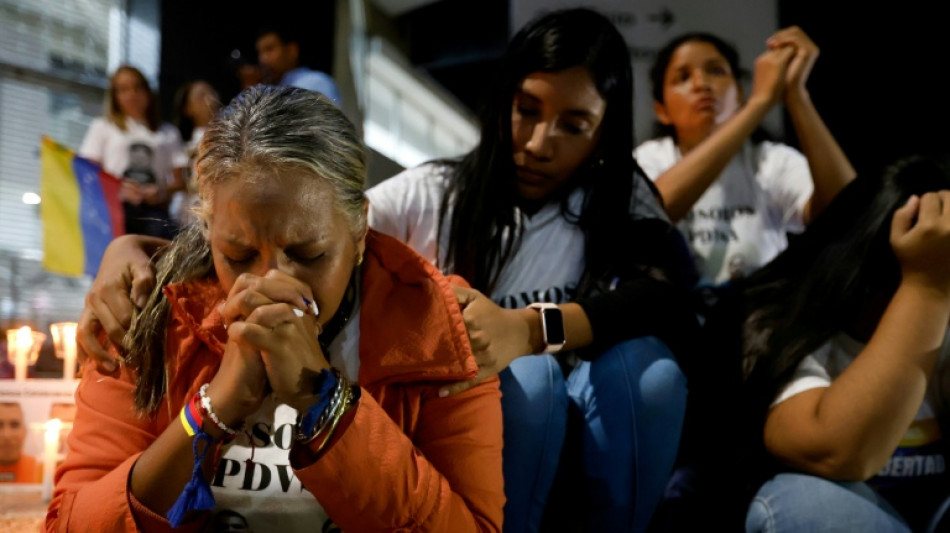
Outside a national police facility in Caracas known as Zone 7, relatives -- some of them on site for weeks -- patiently waited.
"Let's hope it's true," Genesis Rojas told AFP.
A group of relatives who have been camped out for days chanted: "We want to go home!"
A row of police officers with riot shields stood watch.
"They're the ones who should ask us for forgiveness. For kidnapping us, for robbing us, for having violated all our human rights," said Yessy Orozco, whose father is imprisoned in Zone 7.
A group of 10 women went on a hunger strike that lasted more than five days to demand the law's passage and freedom for Venezuela's political prisoners.
The last hunger striker, a woman outside Zone 7, posted a sign that read: "In recovery. No answers." She declined press interviews, saying she felt unwell.
Hundreds have already been granted conditional release by Rodriguez's government since the deadly US raid that resulted in Maduro's capture last month.
Maduro ruled Venezuela between March 2013 and January 2026, silencing opposition and activists under harsh leftist rule.
Maduro and his wife are in US custody awaiting trial. Maduro, 63, has pleaded not guilty to drug trafficking charges and declared that he was a "prisoner of war."
B.Chakrabarti--BD