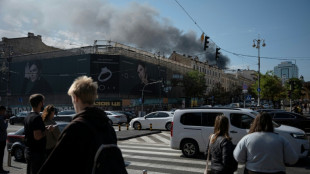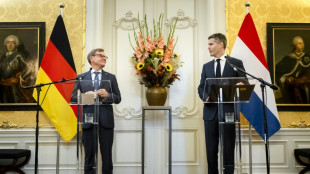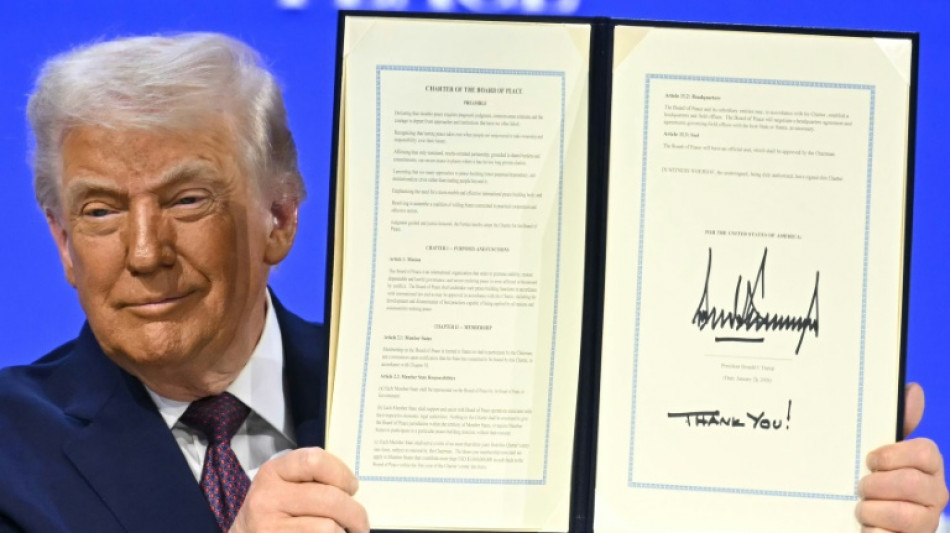
Across the globe, views vary about Trump's world vision / Photo: Fabrice COFFRINI - AFP
Donald Trump is shaping a new world order of empires and coercion, from Venezuela to Greenland and through his newly created "Board of Peace, shattering the post-war global consensus.
As the old order crumbles, AFP sought the views of ministers, advisers, lawmakers and military from across the globe.
Celso Amorim, chief adviser to Brazil's President Lula Inacio Lula da Silva, described the situation as "a very difficult moment of transition to a new order".
"But these periods of transition sometimes lead to terrible consequences," he added.
One Filipino diplomat, speaking on condition of anonymity, said no one felt able to speak out that "the emperor has no clothes".
Weng Hsiao-ling, a Taiwanese lawmaker from the main opposition Kuomintang party, said there had been a belief in "international rules".
"But Trump's approach has broken those norms," she said.
- Geography -
How the future could play out looks different from the Americas, Europe, Eurasia and South Asia.
Brazil, for example, is an emerging power and member of the BRICS group of developing nations, but also located within Trump's purported sphere of influence.
Amorim said Brazil needed "to maintain and build on what's being done", pointing to the recent trade agreement between the European Union and the Mercosur bloc of Argentina, Brazil, Paraguay and Uruguay.
It also needed to stay onside with the United States, as well as China, India and other BRICS countries, he added.
"We are very much interested in maintaining good relations with the United States, let that be clear," said Amorim. But he added: "Those relations must be based on mutual respect; they must be conducted through dialogue."
Many countries on the continent may find it difficult to find a balance and distance from American hegemony. Trump, for example, regularly threatens neighbouring Mexico.
But Ricardo Monreal, parliamentary leader for the ruling Morena party, rejected the idea that Washington could make Mexico a "subordinate".
"The United States believes that Mexico's alignment with the American empire is automatic. I don't think it's that simple," he said.
"The margin we have is very limited because our dependence is strong. Our proximity is unavoidable.
"But I maintain that Mexico, with 110 or 120 million inhabitants, is a country that can shape the economic bloc -- and that the way the United States treats Mexico is not as a partner, but as a subordinate. And I don't think they’re going to pull that off."
- Protection -
China and Russia may feel emboldened by US action under Trump but the countries threatened by their territorial ambitions still want to believe they are protected.
In Taiwan, whose survival in its current political form depends largely on US support, lawmaker Wang Ting-yu, of the ruling DPP party, hopes the show of force to capture Venezuela's Nicolas Maduro will force authoritarian regimes to think twice about acts of aggression.
That will be "a good thing" for Taiwan. But he added: "We need to be careful because China will learn from this kind of operation."
The Filipino diplomat said the Indo-Pacific, including the Philippines and the ASEAN bloc, was vital for the United States' economic security, whatever happened in Greenland.
"I'm not saying (Trump's actions) don't keep people awake at night. But there's a level of comfort there, and we hope we're proven right," they added.
On the South China Sea, where Beijing has designs, Filipino Rear Admiral Roy Vincent Trinidad also said he was reassured by "the surge and upscale of not only US but even allied forces in this part of the globe".
- 'Darwinian' -
Europe enjoyed US protection from the Soviets for decades and according to some remains indispensable to Washington because of its geographical location as the gateway to Eurasia.
Yet one high-ranking officer said the continent was "completely paralysed" and bogged down in debate rather than action.
"The world has become very Darwinian again," he warned. "It's not intelligence that matters most, it's the speed of adaptation" to the new reality.
The chairman of the German parliament's foreign affairs committee, Armin Laschet, said the US-Europe alliance needed to be maintained "for as long as possible" -- even if that means calling Trump "daddy", like NATO chief Mark Rutte.
The current state of affairs has raised questions about the effectiveness of the traditional tools of multilateralism.
Colombia's deputy foreign minister, Mauricio Jaramillo, said he was "surprised" at the lack of weighty UN reaction after Maduro's capture.
But despite criticism about its limitations, Laschet said there was "no alternative" to the world body, which emerged from the failings of the post-World War I League of Nations, and the ashes of World War II in 1945.
"But today the big difference is that countries have atomic weapons that can destroy everything. So, we need to act beforehand."
B.Chakrabarti--BD