Iran protest crackdown latest developments / Photo: ATTA KENARE - AFP
Iran has been pressing ahead with arrests following a wave of protests, according to local media and monitors, as the country faces international pressure over a crackdown rights groups said led to thousands of deaths under cover of ongoing internet restrictions.
Here are key developments:
- Arrests -
Iranian state media continues to regularly report arrests of people it says were part of a "terrorist operation" spurred by Tehran's arch foes Israel and the United States.
State television said on Tuesday that 73 people had been arrested for "American-Zionist sedition" in central Isfahan, though the nationwide figure remains unclear.
Tasnim news agency said late last week 3,000 people had been arrested, with rights groups saying the estimated number has risen to around 25,000.
The Tehran prosecutor has lodged lawsuits against 25 people including athletes and actors, as well as 60 coffee shops "that directly or indirectly accompanied or supported the calls for terrorism" during the protests, the judiciary's Mizan Online website reported, adding that properties had also been seized.
- Iran isolated -
Iran has faced increased international isolation over the crackdown.
The World Economic Forum cancelled Iranian Foreign Minister Abbas Araghchi's appearance set for Tuesday at the Davos summit in Switzerland, saying it would not be "right".
Araghchi said the decision was based on "lies" and political pressure from Israel and the US.
On Monday, Germany's Lufthansa told AFP the airline would not operate flights to Tehran through March 29 and that group member Austrian would also cease flights until mid-February.
And on Tuesday, the UN's Human Rights Council said it would hold an urgent meeting on Friday on "the deteriorating human rights situation" in Iran.
It cited "credible reports of alarming violence, crackdowns on protesters and violations of international human rights law".
Brussels on Tuesday proposed banning the export of more European Union drone and missile tech to Iran over the crackdown, European Commission head Ursula von der Leyen said.
- Pahlavi says 'be ready' -
Reza Pahlavi, the US-based son of the former shah, has presented himself as leader of the opposition.
He called for protests before the rallies surged in size and intensity on January 8, with videos showing crowds chanting his family's name.
He again called for demonstrations over the past weekend.
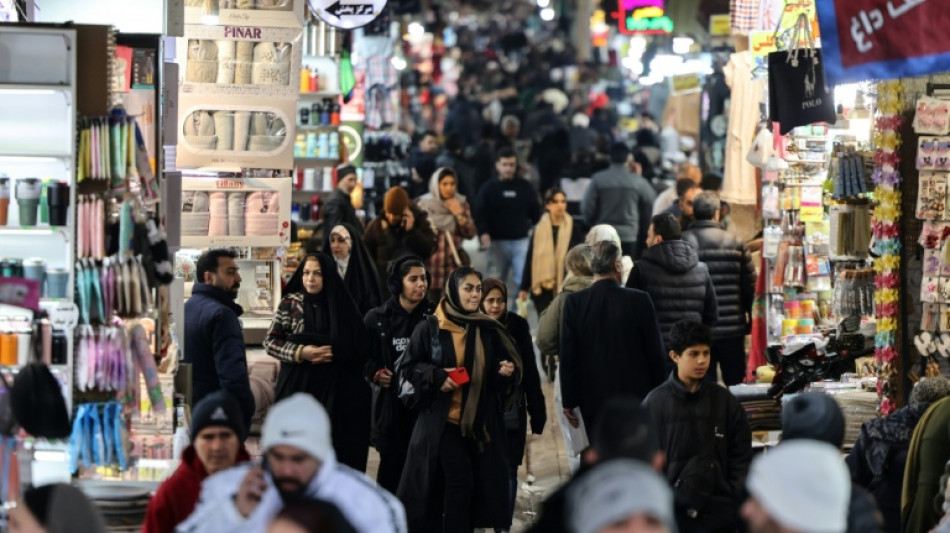
Some reports of scattered demonstrations from late last week emerged but the rallies have largely subsided, with many shops in the capital Tehran's Grand Bazaar open again Tuesday amid a heavy security presence, an AFP correspondent said.
Pahlavi urged Iranians on Tuesday to "be ready", in a post on X.
"The time will come to return to the streets."
- Dead, wounded tolls -
The Norway-based Iran Human Rights NGO (IHR) has said verification of deaths in the crackdown remains severely hampered due to the communication restrictions, but noted on Monday that available information "indicates that the number of protesters killed may exceed even the highest media estimates", which reach 20,000.
The Human Rights Activists News Agency has reported 4,029 confirmed deaths.
Iran's head of the national security and foreign policy commission in parliament, Ebrahim Azizi, said death tolls reported by foreign media were "lies", without giving an exact figure himself, according to the ISNA news agency.
He said, however, that 3,709 security personnel had been wounded.
Other officials have said a few thousand were killed, attributing the deaths to foreign agents.
Fars news agency cited a provincial official from northeastern Razavi Khorasan -- home to Iran's second largest city, Masshad -- saying the death toll for the province was less than 400.
Mehran, a 50-year-old Mashhad native, told IHR there was a bloody crackdown on protests in the city.
"Security forces opened fire on protesters with live ammunition. People carried the wounded in their arms or on motorbikes," he said.
- Internet still restricted -
Twelve days after Iranian authorities imposed an internet blackout, tight communications restrictions remain in place.
The monitor Netblocks said on Tuesday that "traffic on select platforms points to an emergent strategy of whitelisting", in which selected users, entities or services are allowed to bypass restrictions.
Tasnim said on Tuesday that local messaging applications had been activated.
People in Iran have been able to make outgoing international calls and send texts, but cannot receive them.
V.Upadhyay--BD