After winter storms, fires now threaten Portugal's forests / Photo: PATRICIA DE MELO MOREIRA - AFP
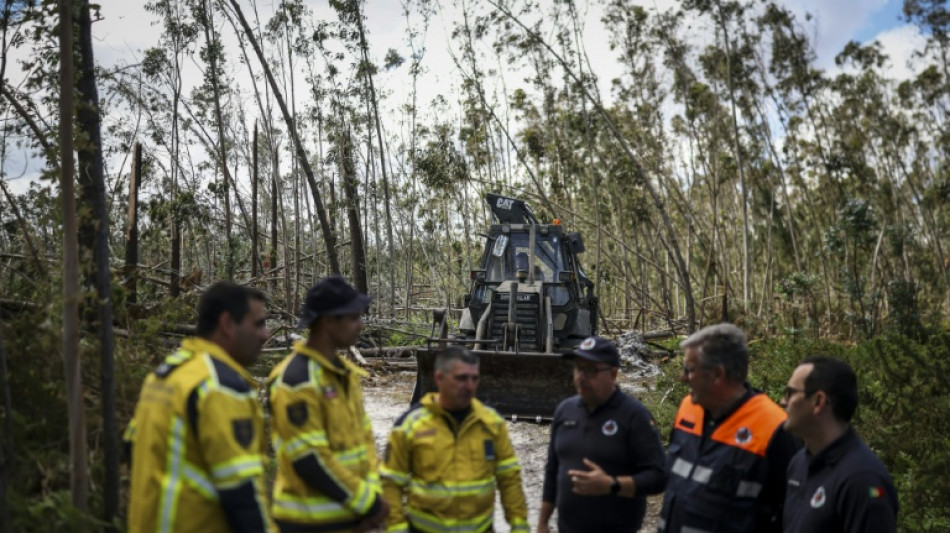
In a forest of pine and eucalyptus trees in central Portugal, chainsaws and diggers hum away clearing paths blocked by trees uprooted in winter storms, but the threat now is a high risk of summer fires.
A team of forest firefighters, civil protection officers and military personnel are out clearing trunks littering forest tracks that provide vital access routes to tackle blazers.
"This area is a real powder keg," said Paulo Vicente, mayor of Marinha Grande, a coastal town home to the Leiria National Forest.
The forest was planted in the 13th century to provide timber used to build the caravels which saw Portugal's Age of Discovery seafarers set out to explore and conquer large swathes of the globe.
Fierce winds from Storm Kristin lashed the area in January, causing some 140 million euros of damage, local officials have said.
The storm left behind huge quantities of dead wood in the forest, which easily spark fire on a "massive scale," explained Vasco Fernandes, a municipal civil protection official.
- 'More reassured' -
"Our commitment is clear: defend the area and, above all, protect people" living nearby, Vicente insisted.
"Of course I'm scared ... but if they clear all this away, I'll feel much more reassured," said Manuel Calhanas, a pensioner of 79 whose house is surrounded by an orchard.
The municipality, targeting the clearance of some 178 km of forest tracks, is still reeling from the major fires of October 2017.
Nationwide, 12,000 kilometres of forest tracks and roads are to be cleared this year, according to civil protection data.
Between 22 January and 15 February, seven storms, including Kristin, hit Portugal with strong winds and heavy rain causing at least seven deaths and damage of some 5.3 billion euros.
- 'Redouble efforts' -
Prime Minister Luis Montenegro has urged "redoubled efforts" in forest clearance operations, while Interior Minister Luis Neves warned of a "very tough" summer fire season.
Between July 1 and September 30, Portugal, which last year had its hottest summer since 1931, will spend some 50 million euros mobilising some 15,000 personnel and 80 aircraft or helicopters as the Iberian peninsula battles the effects of climate change and the increasingly frequent heatwaves and prolonged droughts it brings.
Despite a tenfold investment in prevention following the fires of 2017 that killed more than 100 people, Portugal saw 270,000 hectares of vegetation destroyed last year, its worst toll of the decade.
H.Oommen--BD