S.African activists push back on data centre rush / Photo: RODGER BOSCH - AFP
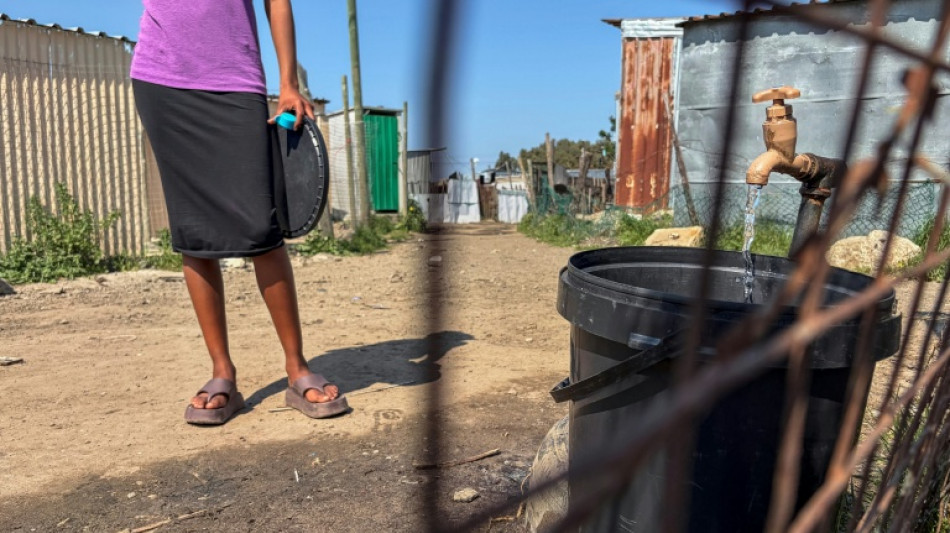
A little boy balanced a large bottle of water on his shoulder as he returned from a communal tap near land acquired by a major data centre developer in South Africa's water-scarce city of Cape Town.
In the maze-like community of Barcelona, there is no piped water or sanitation in the small metal homes that bake in the heat, and older residents pay boys a few rands to go to the tap for them.
The prospect of a water- and power-hungry hyperscale data centre near areas of the city where thousands of people lack proper access to these resources has alarmed activists.
Civil society groups have demanded a halt in the construction of new centres in South Africa -- which already has more than 60, the most on the continent -- pending the establishment of dedicated regulations in a boom sector being driven by AI.
"It's a direct land issue," said Housing Assembly (HA) movement activist Kenneth Matlawe, who lived in Barcelona for 15 years.
"It affects the water and sanitation policy. It affects socio-economic development because any form of development must benefit the community," he told AFP.
HA has been joined by UK non-profit Foxglove and other groups in appealing the city's rezoning of a portion of land near Barcelona acquired by US-based Equinix, which operates around 280 data centres worldwide.
The rezoning could open the way for Equinix to develop the land near the international airport but managing director Sandile Dube told AFP the company had no immediate plans to do so.
Should a project go ahead, it would "follow the due process that takes into consideration some of the concerns that the local communities might have," he said.
The appeal was heard this month with a non-binding recommendation due within 90 days.
- Breakneck speed -
The government is welcoming data centre investment to promote the country -- home to the fastest expansion on the continent -- as "Africa's digital gateway".
But HA and the Extinction Rebellion climate group called in a petition to the Cape Town mayor in September for a halt until "clearly defined, enforceable regulations and standards are in place to govern this rapidly expanding industry."
The city has around a dozen centres and has approved licences for five more.
"If we need to move forward at breakneck speed to roll out the red carpet and let industries build data centres... we need to have proper understanding of what the law allows and regulation needs to happen," said Legal Resources Centre attorney Saadiyah Kadwa, who represents HA and the others.
"It's not just Cape Town, it's the entire South Africa," she told AFP.
In a submission to the South African Human Rights Commission, they said hyperscale data centre facilities could consume more than 4.4 billion litres of water a year, if the standard cooling method was used.
This equalled the annual water use of more than 18,000 households, they said.
Water supply is a fraught issue in Cape Town which narrowly avoided a "Day Zero" water shutdown in 2018 and could reportedly face restrictions from December as the warming El Nino weather pattern takes hold.
Dube said Equinix facilities use dry cooling that makes minimal use of water and aim to use "biorenewable" energy in order to not strain local power grids.
A 160 MW data centre could use about 1.4 billion kWh a year if running at full load, University of Cape Town information systems senior lecturer Pitso Tsibolane told AFP.
- Clear rules -
While there are no specific regulations on data centres, they have to comply with existing building and environmental laws, and prioritise "the self-provision of electricity and water," digital technologies minister Solly Malatsi said.
Hopes that data centres would provide jobs that are desperately needed in South Africa have also been squashed.
"Once operating, they are among the least labour-intensive buildings in the economy," Tsibolane said.
Equinix said its centre outside Johannesburg had employed around 750 people during construction but now had 26 permanent staffers.
Tsibolane said a dedicated legal framework for hyperscale facilities must "require disclosure of electricity demand, water use, cooling design, backup generation and cumulative impact before approval, and make those conditions enforceable."
"Serious investors are not deterred by clear rules," he said.
H.Majumdar--BD