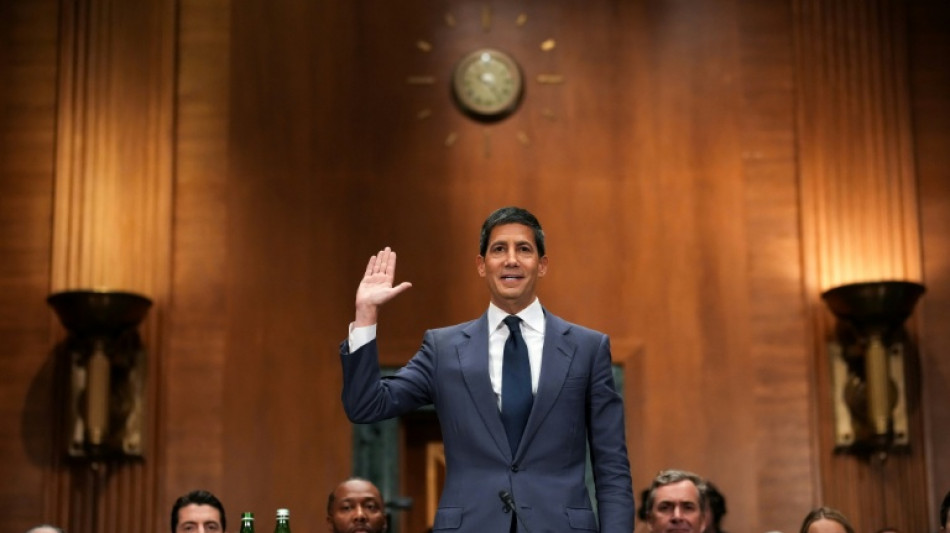
Warsh confirmed as Fed chair as central bank faces Trump assault / Photo: Andrew Harnik - GETTY IMAGES NORTH AMERICA/AFP
The US Senate on Wednesday confirmed Kevin Warsh as the new Federal Reserve chairman to lead a central bank whose independence is under attack and with inflation at a three-year high.
The Senate voted 54 to 45 to in favor of Warsh, with Republicans holding a slim majority and ensuring President Donald Trump's nominee to replace Jerome Powell was confirmed.
Once known as a monetary "hawk" against inflation, Warsh has shifted in line with Trump's push for lower interest rates that has posed an unprecedented challenge to the Fed's independence.
The incoming Fed chair, confirmed for a four-year term, has promised to bring "regime change" at the bank, which he has criticized as too political and too open in communicating its decision-making.
But with inflation still above the Fed's long-term two-percent target -- and rising over Trump's Iran war -- Warsh is unlikely to convince fellow members of the bank's rate-setting committee to cut immediately.
That could leave him open to attacks from Trump, who has relentlessly lashed out at Powell over rate decisions.
"Warsh's biggest challenge will likely be dealing with President Trump," said David Wessel, senior fellow at the Brookings Institution.
"The president does not respect the independence of the Fed and he wants interest rates to be lower."
- Fed independence attacks -
In January, Powell said a Justice Department criminal probe against him over cost overruns related to a building renovation project was intended to create pressure on monetary policy decision-making.
That followed Trump's separate attempt to oust Fed Governor Lisa Cook from the board.
The criminal probe against Powell has since been dropped, as the Trump administration aimed to smooth the path for Warsh's nomination. The Supreme Court is due to rule on the legality of removing Cook.
Both moves were "unprecedented," said Kathryn Judge, a Columbia law professor who focuses on banking.
While Warsh is Trump's pick -- as Powell was nine years ago -- Judge said there was no reason to believe the pressure will ease.
"Fed officials have been put on notice that this president is willing to use all available tools to bully them into acceding to his demands," she said.
- Economic challenges -
Warsh is taking over as the world's largest economy continues to reel from repeated economic shocks.
The pandemic delivered a hammer blow to the Fed's inflation target, with CPI peaking at 9.1 percent in mid-2022. It has since come down, but US households have been battered by years of higher-than-expected price increases.
In April, year-on-year inflation came in at a three-year high of 3.8 percent, fueled in part by surging oil prices in the wake of the US-Israel war on Iran.
The Fed's other mandate is ensuring maximum employment. The unemployment rate has remained relatively firm at around 4.3 percent, but the steady number hides churn beneath the surface.
Job growth has been weak, see-sawing between expansion and contraction for months, with new jobs mainly driven by the health care sector.
The tumult has been partly hidden because there has been a significant drop in labor supply, driven by Trump's deportation drive and an ageing population.
The situation has put Fed policymakers in the difficult position of having to choose between dueling mandates: raise interest rates to combat inflation, or cut them to spur growth?
- A house divided -
It is here that Warsh faces his third major challenge: divisions on the Fed's rate-setting committee on the path forward.
At the last meeting, there was a rare outpouring of dissent, with three members declaring that the Fed should indicate a rate hike could be on the cards to combat inflation.
"One of Warsh's challenges is that the Fed does seem divided -- at times along partisan lines, which is a change from the past," said Wessel.
Added to that another wrinkle: Powell will be the first outgoing chair in more than 70 years not to leave the board at the expiration of his term as its head.
A.Krishnamurthy--BD