Hopes fade in Colombia as window to find quake survivors shuts / Photo: Raul ARBOLEDA - AFP
Hopes faded and camps housing Colombian quake victims grew on Thursday, as the critical 72-hour window for finding people alive closed for good.
Some 377 people are missing after the magnitude 7.4 earthquake, while at least 273 are dead and over 3,800 are injured, official figures show.
The strongest quake to hit Colombia this century devastated the western cities of Cali and Pereira and destroyed almost 13,000 homes across the coffee region and along the coast.
Some of the thousands of families made destitute sought refuge in makeshift camps popping up in Cali's streets and parks.
Maria Rodriguez, 72, lost the apartment she had saved for her entire life.
Cradling a cup of coffee, she gazed at her decimated home from the soccer pitch where she has bedded down with her husband, 76.
"We wonder what aid we're entitled to, whether they're going to relocate us somewhere else, because this is going to last a long time," she told AFP.
- 'Miracles do exist' -
Thursday morning marked 72 hours since the quake, a period when survivors are considered most likely to be found alive, unless they are near pockets of water and air.
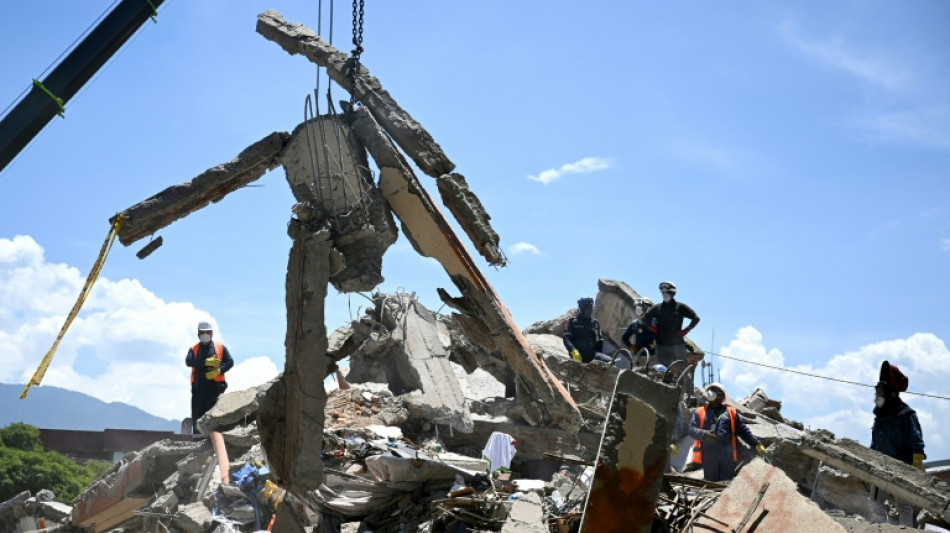
Rescue efforts have not desisted, however, and emergency teams continued digging tirelessly that evening, stopping only to listen for signs of life.
"Miracles do exist, but at this point it's unlikely we'll find people alive," said a firefighter in Pereira, where the smell of decaying bodies was beginning to creep into the air.
The impoverished Choco region on the Pacific coast also suffered immensely, with some of its remote communities yet to be surveyed.
Some cemeteries were badly shaken, with bodies coming out of their graves in a town near Cali.
Colombian President Abelardo de la Espriella has declared the disaster an "economic emergency" and announced three days of national mourning.
"We will do what is necessary," the newly appointed leader stated, vowing to "emerge again as a country and as a society."
-'Not alone' -
Javier Alzate, a 79-year-old psychologist, was trying to remove tiles and chunks of debris that were obstructing access to his damaged home.
"It's very distressing. Very sad. You work 40 or 50 years to buy a little house, struggling all that time to get it. I finally got it, and a few days later it's gone."
"My house is finished. I lost my home and my car."
Dilian Francisca Toro, governor of Valle del Cauca, said officials were conducting a census of damaged and destroyed homes to determine which buildings could still be occupied.
"We have to begin working because people simply cannot bear staying out on the streets any longer," she said.
"People are telling us: 'If you give us the materials, we'll do the work ourselves,'" Toro said, describing plans for community-led reconstruction efforts.
Many Colombians have mobilized to help, bringing water, food and supplies to affected neighborhoods, while long lines formed outside blood donation centers.
Quake victims "are not alone, that is a message we want to convey," Laura Mendoza, a 47-year-old volunteer organizing donations in Bogota, told AFP.
"We are here giving what we can so that they at least have the most basic things," she said.
A musician in Cali took to offering hugs to anyone who needed emotional support.
"We are going through a collective trauma, and I think the best way I could help was by giving away the energy I have and the vitality I have left," Andres Solomon, 46, told AFP.
Colombia was preparing to receive international urban search-and-rescue teams from the United States, El Salvador, Ecuador and Israel, disaster authorities said.
Mexico's President Claudia Sheinbaum said Thursday that Colombia had refused entry to Mexican rescuers over a claim that they lacked correct certification.
De la Espriella's administration is facing criticism over allegedly blocking rescue teams from countries with leftist leaderships, but it denies the accusation.
X.Badami--BD