Chinese AI unicorn MiniMax soars 109 percent in Hong Kong debut / Photo: Tommy WANG - AFP
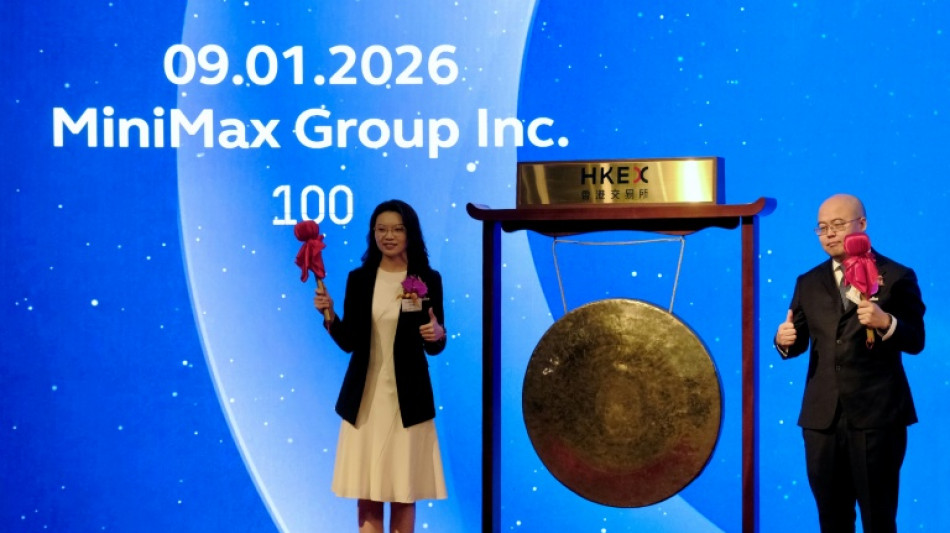
Shares in Chinese AI startup MiniMax soared 109 percent as it went public in Hong Kong on Friday, raising US$619 million in a sign that strong investor demand is rewarding the country's rapidly developing sector.
Rival firm Zhipu AI also saw gains, jumping 20.6 percent on its second trading day after its own US$558 million initial public offering.
This week's flotations come before any IPO announcements from top US startups OpenAI, the maker of ChatGPT, and Anthropic, known for its Claude chatbot.
Founded in 2022, MiniMax has 200 million users and runs several applications including its flagship video generator Hailuo AI.
Its CEO Yan Junjie was previously an executive at leading AI software company SenseTime, which is blacklisted by the US Commerce Department.
The advancement and application of artificial intelligence "depend on ongoing technological innovation, but even more so on the inclusivity and openness of the entire process", Yan said in Friday's listing ceremony.
"We anticipate that over the next four years, the pace of progress in the AI industry will match that of the past four years," Yan added.
Co-founder and COO Yun Yeyi told Bloomberg that MiniMax had only spent around US$500 million to make optimisation and creative innovations.
Proceeds from the IPO will be used for its research over the next five years to develop foundation models and AI-native products, the firm said.
MiniMax's team includes researchers who previously worked for tech giants such as Google and Microsoft as well as China's Alibaba and DeepSeek.
-'Early stage'-
Revenue from overseas markets grew from US$100,000 in the nine months ending September 2024 to US$7.8 million during the same period in 2025, the firm said.
It recorded net losses of $512 million in September 2025.
MiniMax said it may continue to record net losses as it is still expanding and investing to support its long-term growth.
The startup also faces a US$75 million copyright lawsuit from Disney, Universal, and Warner Bros. Discovery over its video-generating tool.
The firm has maintained "there is insufficient evidence to support" the claims.
Analysts told AFP that profits were unlikely any time soon from Zhipu and MiniMax, the so-called Chinese "AI tigers" who compete with tech giants such as Alibaba and ByteDance.
Friday's shares performance shows investors have a "strong appetite for China's tech sector and the AI story", Gary Ng, senior economist at Natixis Corporate and Investment Banking, told AFP.
The whole AI sector is still at an early stage of development, which requires massive investment, he said, adding that profitability is "not the primary focus" for these startups.
"It is about the prospect of which country or firm has the upper hand in gaining market share and staying ahead of the tech curve," he added.
The large language model market in China is estimated to grow to 101.1 billion yuan (US$14.5 billion) by 2030, according to consultancy Frost and Sullivan.
AI will cumulatively contribute US$19.9 trillion to the global economy through 2030 and drive 3.5 percent of global GDP in that year, according to International Data Corporation.
G.Vaidya--BD