Recharged Klopp back to turn Germany from doubters into believers / Photo: FRANCK FIFE - AFP
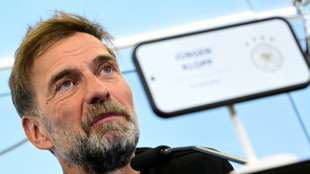
Two years after stepping down from Liverpool citing a lack of energy, Jurgen Klopp has returned to the dugout to oversee the mammoth task of restoring German football to its former glory.
Football's most decorated European nation, the once-formidable Germans have lurched from setback to disaster since winning the 2014 World Cup.
In Klopp, the German FA (DFB) have a coach with a record of returning flagging giants to the top of the game.
While the German media has rejoiced in the hope Klopp, 59, will construct a 'heavy metal' team similar to his best Liverpool and Borussia Dortmund sides, the manager's most pressing task is more fundamental.
At his opening Liverpool press conference in 2015, Klopp said "if someone wants to help LFC, you have to change from doubter to believer."
Now, with the four-time World Cup winners again at a low ebb, Klopp's first task is to heal the country's fractured self-belief.
- The 'normal' one -
Klopp's unconventional back story has been told so often it has almost become a myth.
As a player, the Stuttgart-born Klopp spent most of his career at second-tier Mainz.
"I had the talent for the fifth division, and the mind for the Bundesliga. The result was a career in the second division," the former defender said of his playing career.
Klopp took over as Mainz coach aged 33, beat relegation and then lifted the unheralded side to the top flight for the first time.
In 2008, Klopp took over Dortmund, the 1997 Champions League winners who had fallen on tough times.
Dortmund were reeling from near bankruptcy, having at one point borrowed two million euros ($2.3 million) from rivals Bayern Munich to pay their players, and had finished 13th the year before Klopp's arrival.
Klopp took Dortmund to back-to-back Bundesliga titles and the 2013 Champions League final, where they lost narrowly to Bayern.
After a short sabbatical, Klopp moved to Liverpool in 2015. At Anfield, the German was handed a similar task to that at Dortmund: revitalising a fallen football colossus, albeit this time on a global scale.
In his opening press conference, Klopp showed a now familiar level of humour and self-awareness, declaring himself "the normal one", a reference to Jose Mourinho's "special one" characterisation.
By casting himself as the anti-Mourinho, Klopp unveiled the everyman credentials which would endear him to supporters far beyond Merseyside.
- 'Doubter to believer' -
Klopp diagnosed Liverpool's problems as rooted not just in a lack of talent, but in a lack of belief.
Nine years on, and after winning every trophy on offer, including the Premier League and Champions League, Klopp's "doubters to believers" statement became synonymous with the club's transformation.
He left the club in 2024.
Post-Liverpool, Real Madrid and England were among those interested in Klopp's services.
But as time went on -- and with Klopp in a seemingly comfortable role overseeing Red Bull's football operations -- doubts that he would return to the dugout grew.
In an interview with AFP in January, Klopp suggested he was done with coaching.
"I don't expect to change my mind, but I don't know...
"It might sound arrogant, but I know I can coach a football team. But I don't need to do it until my last day."
Even as the likelihood of returning to the day-to-day grind of club football dimmed, the Germany job always seemed the one most likely to tempt him back.
Yet another World Cup failure, a last-32 elimination by Paraguay, opened the door for Klopp's return.
Germany's problems appear many and varied, but like at Anfield, the main affliction is one of belief.
The Germans' hard-earned reputation as a swaggering tournament team who performed at their best when the bright lights came on has all but evaporated.
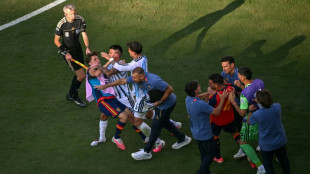
Nowhere was Germany's predicament better illustrated than in the penalty shootout against Paraguay.
After Manuel Neuer saved Paraguay's fifth attempt to keep Germany's hopes alive, captain Joshua Kimmich pleaded with reluctant players to take the sixth shot.
It was a far cry from a team known for their mental resilience who had won their last six penalty shootouts at major tournaments.
Defender Jonathan Tah, who had never taken a penalty in senior football, stepped up and skied his shot over the goal.
Germany lost a World Cup shootout for the first time, while demonstrating the magnitude of the task facing Klopp and his team.
C.F.Salvi--BD