Johannesburg residents 'desperate' as taps run dry / Photo: Ilaria Finizio - AFP
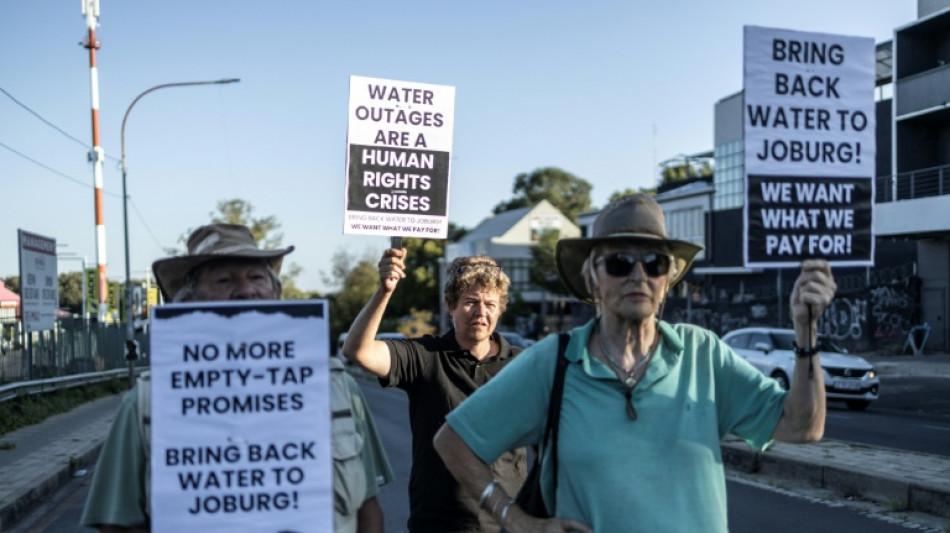
Sitting in the middle of a Johannesburg road as traffic snaked around her, Susan Jobson banged empty bottles to protest the water cuts that have upended her life for nearly three weeks.
The 63-year-old, who struggles to walk and lives alone in a small cottage, said she joined a demonstration Wednesday by residents of the city's upmarket Melville suburb because the lack of water had left her "completely desperate".
"I'm not walking that well, which means it's difficult to get water," she told AFP, while more than 100 protesters chanted next to her and passing motorists honked in support.
"It's difficult to fill up the toilet, washing doesn't get done, and I've got to make plans around food," she said.
Several parts of South Africa's economic capital -- from wealthy areas to the poorer ones -- have been gripped by weeks-long water shortages as decades of infrastructural decay and lack of maintenance push the system to the brink.
In other areas of the country, including the southern city of Cape Town, shortages due to prolonged droughts were last week declared a national disaster.
This meant restrictions could be imposed to avoid a dreaded "Day Zero", when the taps run dry.
But in Johannesburg, residents are "living a Day Zero every single day", despite full dams and heavy rains in the past months, said Ferrial Adam, executive director of advocacy group WaterCAN.
- 'National disaster' -
Around 30 percent of the city's water supply is lost to leaks, Adam said, and municipal plans to repair infrastructure and install new reservoirs have been slow to come to fruition.
In some other regions, such as the touristy coastal town of Knysna, this rose to 50 percent, she said.
"Our municipalities across the country are failing, both in supply of water and sanitation," said Adam, who wanted the government to step in and declare the crisis a national disaster.
"If declaring it a national disaster is the one way we can get all politicians, national government, provincial government, local government, to actually focus on water and sanitation, then that is what needs to happen," she told AFP.
Under mounting pressure after months of water protests across the city, mayor Dada Morero rejected claims that Johannesburg as a whole faced a "Day Zero" and defended municipal efforts to "push and balance the water distribution".
Morero is from the African National Congress (ANC), which has come under fire for mismanagement since it took power in 1994. Anger over failures in the supply of basic services was in part responsible for support plunging to 40 percent in the 2024 national elections.
The party is expected to take another bashing over the same complaints at local government elections due later this year.
Hoping to portray a hands-on approach to the crisis that would win over voters, the second-largest party in South Africa's ruling coalition, the Democratic Alliance, said Wednesday it would take legal action to compel the city to deliver water.
Down the road from Wednesday's protest, a pre-primary school had already taken matters into its own hands by investing about 15,000 rand ($944) in a water tank.
But even that reserve had run dry after 23 days without municipal supply, principal Arifa Banday told AFP, and the school now had to rely on deliveries from private water trucks.
"We try as best as possible to keep going, especially because we're in charge of caring for so many little ones," she said, as parents dropped their toddlers off in the leafy playground.
Protester Simon Banda said the lack of support for affected residents was a "tragedy".
"We don't expect them to produce miracles. There's supposed to be a water truck almost at every corner, but there is nothing like that," he told AFP. "That, to me, is unforgivable."
K.Williams--BD