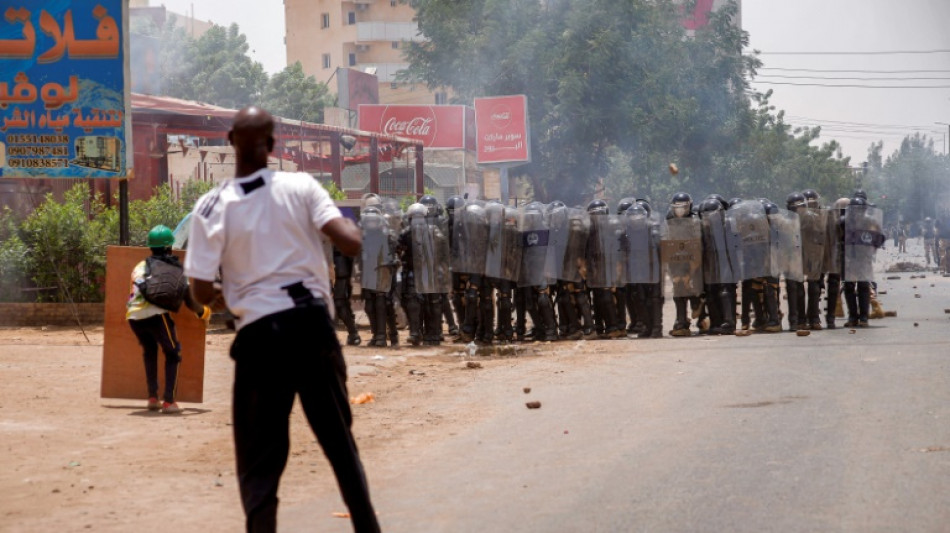
Sudan police fires tear gas against pro-democracy protests / Photo: - - AFP/File
Sudanese police fired tear gas in the capital Khartoum on Saturday in an attempt to disperse hundreds of pro-democracy protesters demonstrating against coup leader General Abdel Fattah al-Burhan, AFP correspondents reported.
Security forces had erected road blocks on bridges crossing the Nile river linking Khartoum to its suburbs, AFP reporters said, to deter protesters who had vowed to take to the streets in large numbers.
The demonstrators oppose Burhan's October power-grab and are also highlighting heavy fighting in Sudan's southern Blue Nile state, about 450 kilometres (280 miles) south of Khartoum.
They accuse the military leadership and the ex-rebel leaders who signed a 2020 peace deal of exacerbating ethnic tensions there for personal gain.
Sudan's latest coup derailed a transition to civilian rule, sparking near-weekly protests and a crackdown by security forces that has left at least 114 killed, according to pro-democracy medics.
Nine were killed on June 30, the medics said, when tens of thousands had gathered and their deaths reinvigorated the movement.
On July 4, Burhan vowed in a surprise move to make way for a civilian government.
But the country's main civilian umbrella group rejected the move as a "ruse". Protesters have continued to press the army chief to resign.
The rallies on Sunday follow a period of relative calm over the Muslim holiday of Eid al-Adha, which ended last week.
Protesters in Khartoum held signs noting the recent bloodshed in ethnic clashes in the south of the country.
"Al-Damazin is bleeding," one Khartoum protester's sign read on Sunday, referring to the state capital of Blue Nile.
Troops were deployed in the Blue Nile town of Al-Roseires Sunday, after at least 33 people were killed and more than 100 wounded in the state, according to the health ministry.
Guerrillas in Blue Nile battled former strongman president Omar al-Bashir during Sudan's 1983-2005 civil war, picking up weapons again in 2011.
Bashir was ousted in 2019. The following year, the transitional administration reached a peace deal with key rebel groups, including from Blue Nile as well as the war-ravaged western Darfur region.
The current violence in Blue Nile is between two local ethnic groups, the Berti and the Hausa.
D.Jayaraman--BD