GSK
-0.1500
As shells explode in the distance and buildings burn, an old lady in a hat waits for a bus to take her out of the city of Severodonetsk in east Ukraine, whispering to the cat sitting on her lap.
"I didn't want to leave, but you see all the bombings," the woman says, trying to soothe the scared animal. "Now we are homeless."
She is among dozens of elderly people, clutching their bags and cherished pets on Thursday, to heed the official call to evacuate east Ukraine.
Since Russia withdrew from the northern part of the country and signalled its intention to turn its focus to the "liberation" of Donbas in the east, residents have lived in fear of a large-scale assault.
"These few days may be the last chance to leave," Sergiy Gaiday, governor of the eastern Lugansk region, part of the Donbas, said Thursday.
In Severodonetsk, an old school bus and another belonging to a football team have been ferrying residents to a small railway station some 10 kilometres (six miles) outside the city. There, with the help of volunteers, they travel to the city of Slavyansk, about 60 kilometres away, where they will board another train to continue their journey west.
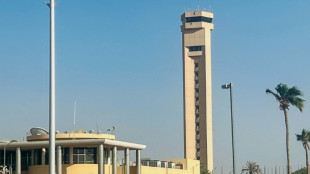
Around 50 people have gathered on the benches in front of the city's Palace of Culture, a peculiar cross between Soviet cubism and a Greek temple. The imposing yellow structure is intact, but several of its tinted windows have been blown out.
“Look what the rockets did, the ruined apartments all around you,” says an elderly woman, clutching her purse to her chest. "We've been living in the basement for more than a month. I have no more gas, electricity or water. It's impossible to stay at home."
- Former jewel -
Denis, a man in his forties with a pale, emaciated face, who looks older than his years, says life in Severodonetsk, under constant Russian bombardment, has become unbearable.
"Every day it's worse and worse. They're raining down on us from everywhere. We cannot take it anymore," he says. "We can still find a little bread in the morning at the store. Volunteers and the army have been giving us food."
Denis fears that his city will see the same fate as the strategic southern port of Mariupol, which has been devastated by Russian forces after a weeks-long siege.
"I want to escape this hell," he says, but the question of where to will have to wait. "I will think about it where there are no more shells falling around me."
"Why this war?", remarks a man, clearly intoxicated. "Shush," his wife scolds, her face as red as her husband's.
"We are afraid to have to wait here, outside in the open,” says Denis with a worried look.
Once the jewel of the coal-mining Donbas region and a showcase for Soviet communism, Severodonetsk, which counted around 100,000 inhabitants before the war, is a grey city of long-closed, dilapidated factories, now being pounded by Russian rockets.
When the bus arrives, the residents crowd the doors, suitcase in hand. "No one will be left behind, don't worry," says the driver.
Women and children were evacuated on an earlier bus.
A few rare pedestrians can be seen on the streets, a sign that there are still some residents left in town.
"I'm staying. I still have gas and electricity at home," an elderly man says calmly, carrying a bag of groceries. As a former "sergeant aboard a nuclear submarine", he says he is not scared.
A minivan arrives to pick up the last remaining evacuees. "It's dangerous to stay, it's dangerous to walk, it's dangerous to drive," the driver says, trying to hurry the process along. "Everything is dangerous here!".
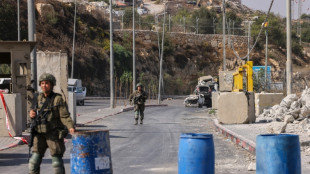
Hunkered down in the surrounding buildings, Ukrainian soldiers are reinforcing their positions, preparing for street fighting to come.
A series of heavy bangs are heard nearby. Then, the sound of Ukrainian artillery fire. The lull in the city centre is over. Russian forces are going to retaliate. It is time to get out.
A.Krishnamurthy--BD