Fighting enters third week in Sudan despite new truce / Photo: - - AFP
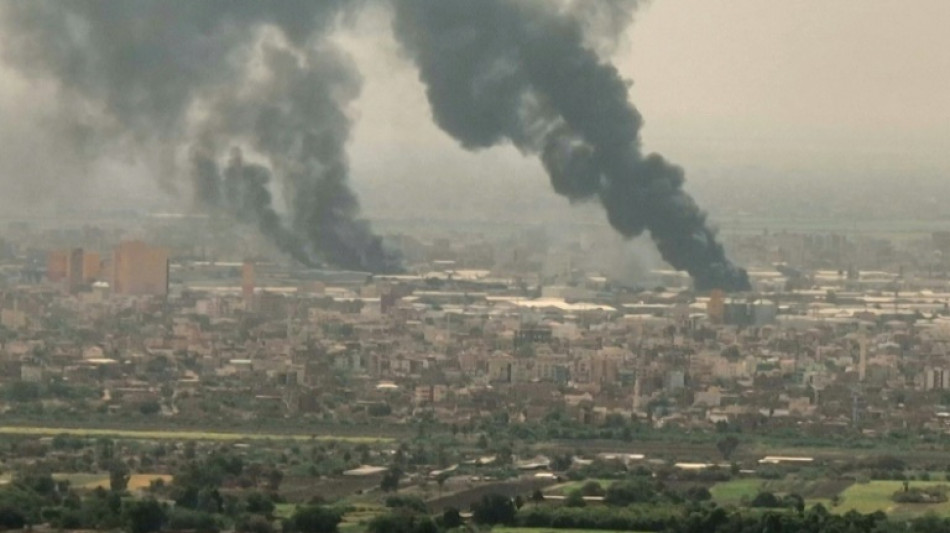
Warplanes on bombing raids drew heavy anti-aircraft fire over Khartoum on Saturday as fierce fighting between Sudan's army and paramilitaries entered a third week, despite a renewed truce.
Sudan has plunged into chaos and lawlessness since the fighting erupted on April 15 between forces loyal to army chief Abdel Fattah al-Burhan and his number two Mohamed Hamdan Daglo, who commands the paramilitary Rapid Support Forces (RSF).
Burhan and Daglo have agreed to multiple truces since the start of the conflict, but none has effectively taken hold, with each side blaming the other for breaching them.
The latest three-day ceasefire was agreed Thursday after mediation led by the United States, Saudi Arabia, the African Union and the United Nations aimed at securing a more lasting truce.
"We woke up once again to the sound of fighter jets and anti-aircraft weapons blasting all over our neighbourhood," a witness in southern Khartoum told AFP.
Another witness said fighting had been ongoing since the early morning, especially around the state broadcaster's headquarters in the capital's twin city of Omdurman.
Residents across Khartoum -- home to five million people -- have largely sheltered at home despite supplies of food and water dwindling to dangerously low levels, and a lack of electricity.
Some managed to sneak out only during brief lulls in fighting to buy desperately needed supplies.
- Trading blame -
As battles raged on the ground, the two rival generals took aim at each other in the media, with Burhan branding the RSF a militia that aims "to destroy Sudan", in an interview with US-based TV channel Alhurra.
He also claimed "mercenaries" were pouring over the border from Chad, Central African Republic and Niger to exploit the chaos.
Daglo denounced the army chief in an interview with the BBC, saying he was "not trustworthy" and a "traitor".
The clashes have so far killed at least 512 people and wounded 4,193, according to the health ministry, with the death toll feared to be much higher.
Some 75,000 have been internally displaced by the fighting in Khartoum and the states of Blue Nile, North Kordofan, as well as the restive western region of Darfur, the UN said.
Tens of thousands of Sudanese have fled into neighbouring countries including Egypt, Ethiopia, Chad and South Sudan, while foreign countries have carried out mass evacuations of their nationals.
Britain said it would end evacuation flights for its citizens and their relatives on Saturday, after airlifting more than 1,500 people this week.
The United Nations said on Friday that its last international staff had been evacuated from Darfur.
The World Food Programme has said the violence could plunge millions more into hunger in a country where 15 million people -- one-third of the population -- already need aid to stave off famine.
- 'Alarming' conditions in Darfur -
In West Darfur state, at least 96 people were reported to have been killed in the city of Geneina since Monday, according to UN human rights office spokeswoman Ravina Shamdasani.
The UN described the situation in Darfur as "alarming" while Doctors Without Borders (MSF) said there were reports of widespread looting, destruction, and burning of property, including at camps for displaced people.
"The current fighting has forced us to stop almost all of our activities in West Darfur," said Sylvain Perron, MSF's deputy operations manager for Sudan.
"We are incredibly worried about the impact this violence is having on people who have already lived through waves of violence in the previous years."
Darfur is still reeling from its devastating 2003 war, when then hardline president Omar al-Bashir unleashed the Janjaweed militia, mainly recruited from Arab pastoralist tribes, to crush ethnic minority rebels.
The notorious Janjaweed -- accused by rights groups of committing atrocities in Darfur -- later evolved into the RSF, which was formally created in 2013.
The scorched-earth campaign left at least 300,000 people dead and close to 2.5 million displaced, according to UN figures, and saw Bashir charged with war crimes, crimes against humanity and genocide by the International Criminal Court.
But the two generals later fell out, most recently over the planned integration of the RSF into the regular army.
F.Varghese--BD