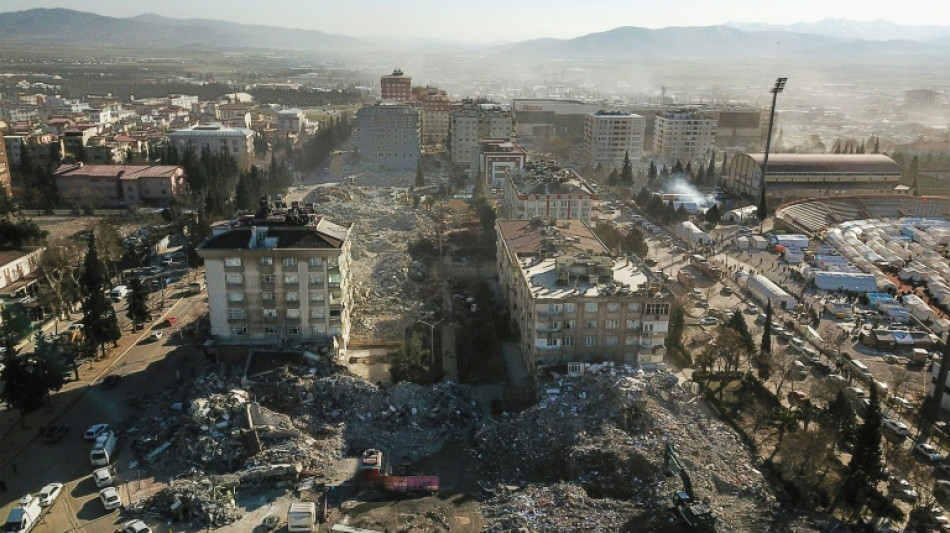
Focus on humanitarian crisis as Turkey-Syria quake toll hits 35,000 / Photo: OZAN KOSE - AFP
Rescue teams began winding down the search for survivors on Monday as the focus switched to tackling a dire humanitarian disaster caused by the earthquake that has left more than 35,000 dead in Turkey and Syria.
Syria, already wracked by 12 years of civil war, is of particular concern. The United Nations held an emergency meeting Monday on how to boost aid to rebel-held areas, as anger grows over a sluggish international response to the pariah nation.
Syrian President Bashar al-Assad, isolated and subject to Western sanctions, called for international assistance to help "rebuild infrastructure" in the country, where the UN estimates more than five million have been left homeless.
Seven days after the 7.8-magnitude tremor sent buildings crumbling across the region, stories continue to emerge of people found alive in the rubble, but experts warn hopes of survival are dimming.
In Turkey on Monday, siblings Harun, 8, and Eyuphan, 15, were rescued 181 hours after the fifth-deadliest earthquake of the 21st century, the Andadolu news agency reported.
The confirmed death toll stands at 35,224 as officials and medics said 31,643 people had died in Turkey and at least 3,581 in Syria.
The United Nations said it expects the toll to rise far higher.
Survivors face a lack of water and poor sanitation. In Turkey's southern Adiyaman an outbreak of scabies -- a skin disease known to spread in crowded areas -- is affecting adults, while children are suffering from diarrhoea, local media reported.
Serkan Tatoglu, 41, a father of four, describes how his family is haunted by their losses as they wait out the aftershocks in a tent city near the quake's epicentre in southern Kahramanmaras.
"The youngest, traumatised by the aftershocks, keeps asking: 'Dad, are we going to die?'" Tatoglu said of his six-year-old.
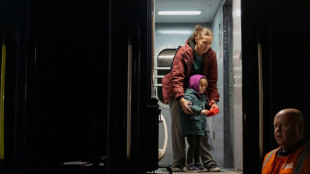
Turkey's Vice President Fuat Oktay said 574 children pulled from collapsed buildings were found without any surviving parents.
Only 76 had been returned to other family members.
Hatice Goz, a volunteer psychologist in Turkey's Hatay province, said she has been fielding "a barrage of calls" from frantic parents looking for missing children.
- Millions 'need to be fed' -
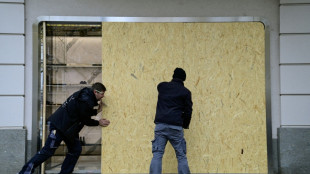
In Antakya, clean-up teams have been shifting rubble and putting up basic toilets as the telephone network started to come back in parts of the town, an AFP reporter said.
The city was patrolled by police and soldiers deployed to prevent looting following several incidents over the weekend.
"Send any stuff you can because there are millions of people here and they all need to be fed," Turkish Interior Minister Suleyman Soylu appealed late on Sunday.
Aid packages, mainly clothes, were opened and spread across the streets in Hatay province, according to NTV. One video showed aid workers throwing clothes randomly into a crowd as people tried to grab whatever they could.
Soylu said rescue efforts had ended in seven parts of Kahramanmaras.
Vice president Oktay said Sunday that 108,000 buildings were damaged across Turkey's quake-hit zone, with 1.2 million people housed in student accommodation and 400,000 people evacuated from the affected region.
The economic cost of the disaster could be as much as $84.1 billion, Turkish employers' association Turkonfed said in a report Monday.
- Focus on Syria -
UN humanitarian affairs chief Martin Griffiths will on Monday give a presentation to the UN Security Council on the situation in Syria, after visiting the region over the weekend.
"We have so far failed the people in north-west Syria," Griffiths said Sunday on Twitter.
"They rightly feel abandoned," he said, adding that it was the international community's obligation "to correct this failure as fast as we can."
A 10-truck UN convoy has crossed from Turkey into northwest Syria via the only open border crossing to the region, carrying shelter kits, an AFP correspondent reported Sunday.
However, UN officials said more was needed for the millions whose homes were destroyed.
"Our focus now is on helping the Syrian people," said UN envoy Geir Pedersen in Damascus.
On Monday, Sudan sent a flight carrying 30 tonnes of aid to Syria.
The head of the World Health Organization, Tedros Adhanom Ghebreyesus, said Damascus had given the all-clear for aid convoys from government areas, but that the WHO was still waiting for a green light from rebel-held areas before going in.
"The compounding crises of conflict, Covid, cholera, economic decline and now the earthquake have taken an unbearable toll," Tedros said.
burs-fb/ach
G.Radhakrishnan--BD