Germany warns on trade imbalance as economy minister visits China / Photo: Patrick Pleul - POOL/AFP
Germany's economy minister began a visit to China on Wednesday with Berlin saying it wanted to boost cooperation with a key partner while also warning of worsening trade imbalances.
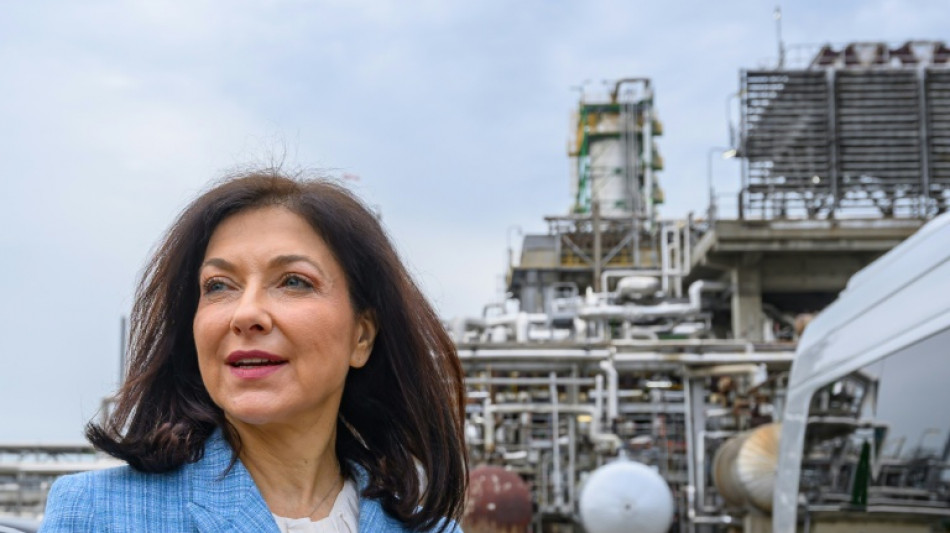
Katherina Reiche arrived in Beijing for the three-day trip, the latest senior German official to head to Berlin's top trading partner as they seek to navigate increasingly complex ties.
China -- long a reliable market for German exports, from cars to factory machinery -- has in recent years become a fierce competitor in many industries, turning the relationship on its head.
Reiche, accompanied by a business delegation and German MPs, said that China and Germany "are linked by one of the most significant economic relationships in the world".
"In times of global uncertainty, we need dialogue, trust and robust partnerships. I will therefore advocate on the ground for modern cooperation -- based on openness, competition and mutual benefit," she said in a statement from her ministry.
As well as Beijing, Reiche will visit the southern Chinese city of Guangzhou.
She will hold talks with Chinese Vice Premier He Lifeng and Chinese Commerce Minister Wang Wentao and visit companies.
But there are many areas where Beijing and Berlin disagree, from trade practices to human rights, and Reiche will likely broach some of these.
The economy ministry noted that in particular there was now a "clear trade imbalance" between the world's number two and number three economies.
German exports fell by around 10 percent in 2025, to roughly 80 billion euros ($93 billion), while imports from China rose to around 170 billion euros, it said.
Increasing competition for German businesses in China has been one factor weighing on Europe's top economy, which has stagnated in recent years.
Chancellor Friedrich Merz visited China in February, and the widening trade gap was also a key focus.
Still, both Berlin and Beijing are keen to strengthen ties at a time of global uncertainty sparked by US President Donald Trump's often erratic policies.
burs/sr/fz/cw
T.Deshpande--BD