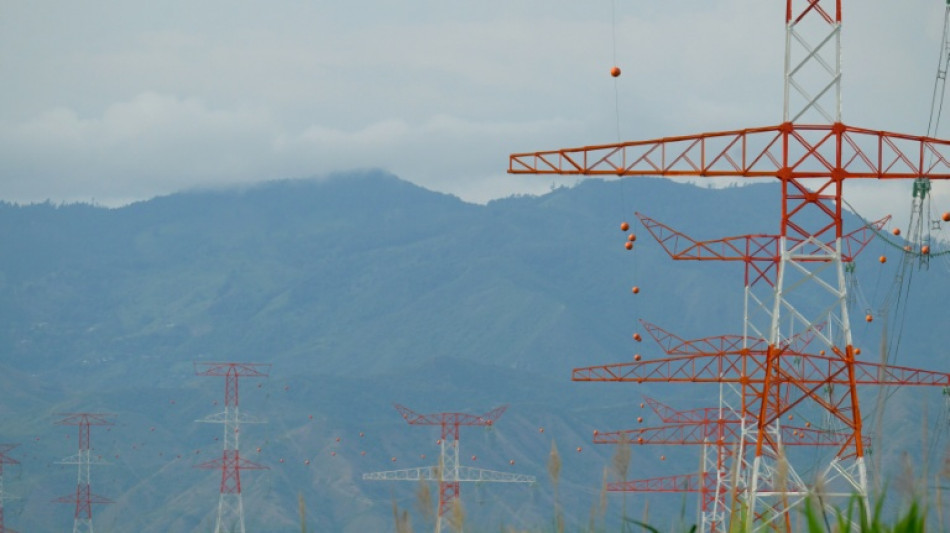
Ecuador, Colombia ramp up trade war with tit-for-tat energy levies / Photo: Joaquín Sarmiento - AFP
Colombia and Ecuador punished each other with dueling levies Thursday on fuel and other imports, escalating a trade and diplomatic feud over narco activity on their shared border.
Quito accuses Colombia -- the world's biggest cocaine producer -- of falling short in the fight against drug cartels blamed for a steep rise in violent crime in once peaceful Ecuador.
On Wednesday it announced a 30 percent tariff, starting in February, on imports from Colombia, whose energy minister denounced "an act of economic aggression."
Bogota retorted Thursday with a matching 30-percent "corrective action" on about 20 unspecified products, for now.
Bogota also announced it would suspend electricity sales to Ecuador, which relies heavily on its neighbor for power and hit back with a levy on Colombian oil traveling through its majority state-owned OCP pipeline.
Ecuador's President Daniel Noboa is an ally of US counterpart Donald Trump, who has also made the drug fight a priority and has similarly used tariffs in pursuit of his goals.
But experts contacted by AFP said Ecuador may draw the short straw in its standoff with Colombia, whose ministry of mines and energy announced a suspension of "international electricity transactions" with the neighboring country.
Without mentioning the trade spat, the ministry cited "increased pressure on the Colombian electrical system" as it announced "a preventive measure aimed at protecting Colombia’s sovereignty and energy security."
Colombia repeatedly came to its neighbor's aid as Ecuador suffered prolonged electricity outages during droughts in 2024 and 2025.
Ecuador, a country of 17 million, relies on hydro generation for 70 percent of its electric power. It consumes more energy than it produces, and Colombia covers about half of the deficit.
A shortage of electricity "could paralyze" Ecuador," Alberto Acosta Burneo, an economic analyst at Grupo Spurrier, told AFP.
Colombia proposed a bilateral meeting at the border on January 25, according to an official letter published by local media.
- 'Reciprocal' -
Colombia, too, will the feel the pain of a trade war if it has to pay a higher levy for oil transport through Ecuador's OCP pipeline.
"The tariff for transporting Colombian crude oil through the OCP will be reciprocal to the measures taken regarding electricity," Environment and Energy Minister Ines Manzano said on X.
According to the OCP website, 46 million barrels of Colombian crude have been carried through the pipeline since 2013, from the Amazon jungle to a port on Ecuador’s Pacific coast.
The OCP has capacity for 450,000 barrels per day.
Ecuador, once one of South America's safest countries, has been transformed into a major cocaine trafficking hub in the space of a few years, plagued by gangs with ties to Mexican and Colombian cartels.
It closed 2025 with a rate of 52 homicides per 100,000 residents, amounting to one every hour, according to the Geneva-based Organized Crime Observatory.
Ecuador's 600-kilometer (370-mile) border with Colombia, which stretches from the Pacific Ocean to the Amazon, is porous and riddled with contraband crossings.
Leftist Petro and counterpart Noboa are on opposite ends of the political spectrum, and have frequently clashed on issues including the recent US military ouster of Venezuela's Nicolas Maduro.
But the countries are historically close trading partners.
Colombia's main exports to its neighbor are electricity, medicines, vehicles, cosmetics, and plastics, according to Colombia’s National Association of Foreign Trade.
Ecuador's exports include vegetable fats, canned tuna, minerals and metals.
O.Mallick--BD