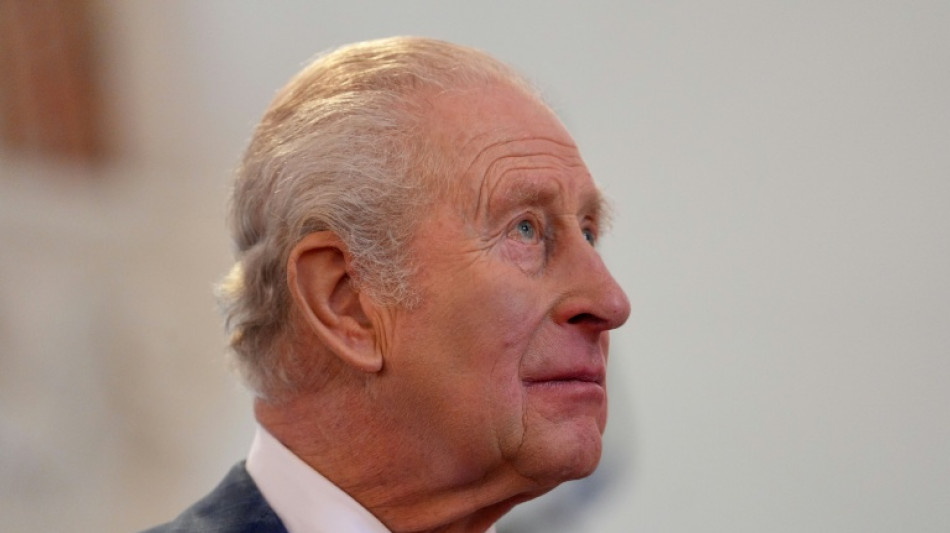
Andrew's arrest hands King Charles fresh royal crisis / Photo: Yui Mok - POOL/AFP
King Charles III has been left wrestling with a new test after the arrest of his brother Andrew, the latest in a series of painful personal shocks to mar his reign.
"Charles has, since coming to the throne in September 2022, been battered by a succession of difficulties and crises, whether it's in relation to his second son, Harry ... his health, the health of Catherine, or the very disruptive figure of Andrew," royal commentator Ed Owens told AFP.
After decades waiting in the wings, Charles became king in September 2022 on the death of his mother, Queen Elizabeth II, who had reigned for 70 years and commanded deep public affection and respect.
His coronation on May 6, 2023 was rich in pageantry, projecting continuity and tradition.
Yet trouble stirred even before the crown was placed on his head.
In January 2023, his youngest son Harry released his explosive memoir "Spare", launching repeated attacks on the royal family and airing private disputes lapped up by a global audience.
Living in California with his wife Meghan since 2020 and estranged from his family, Harry has been accused by critics of damaging, for personal and commercial gain, an institution long seen as unshakeable.
Though Harry has since sought reconciliation, the rift remains.
Then in February 2024, Charles, now 77, revealed he was undergoing treatment for cancer, without disclosing the type, forcing him to scale back public duties.
Weeks later came another blow: Catherine, Princess of Wales and wife of heir apparent William, announced she too was being treated for cancer.
While Catherine has since said she is in remission and Charles indicated in December that his treatment was being eased, illness has cast a long shadow over the royal household.
The king has won admiration for his dignified, touching fight against cancer, talking about his shock at learning his diagnosis, and making a point of publicly visiting patients, urging prevention and early detection.
But arguably the gravest threat to his reign has come from his younger brother Andrew Mountbatten-Windsor, as he is now known, who remains eighth in line to the throne.
Royal historian Andrew Lownie told AFP, it was "a crunch point" for the monarchy.
If it is found that "they have been abetting him, enabling him, protecting him, then I think Charles will have to stand aside," he said.
The long-standing ties between the deeply unpopular Mountbatten-Windor to late convicted American sex offender Jeffrey Epstein have caused years of embarrassment.
A photograph published in 2011 showing the former prince with his arm around the waist of Virginia Giuffre, Epstein's main accuser, proved especially damaging.
- 'Monarchy unstable' -
Scrutiny has intensified in recent months.
In October, Charles sought to draw a line under the affair by stripping his brother of all his titles.
But new documents released by the US Department of Justice last month reignited public outrage.
On Thursday, Andrew was arrested and held for hours in police custody, suspected of having passed confidential information to Epstein during his 2001-2011 role as a UK trade envoy.
It was the first time a senior British royal has been arrested in modern history.
In a rare personally signed statement, Charles vowed Thursday the "law must take its course" and expressed his "deepest concern".
Some commentators have likened the moment to other crises that have shaken the monarchy, such as the 1936 abdication of Edward VIII and the 1997 death of Princess Diana, Charles's ex-wife.
In both cases, it took more than a decade to restore stability and public confidence, Owens said.
For Pauline Maclaran, an academic and royal family expert, Charles is in part a victim of timing.
"The monarchy seems quite unstable now and that was always going to happen after the queen passed away because she had been there for so long and had given this great sense of continuity," she said.
The late queen "certainly protected Andrew", Maclaran added.
Owens was more direct.
"Andrew was an unexploded bomb that the queen passed on to Charles," he said.
"This episode, I think, could potentially be hugely damaging to the institution," he added. "Already, I think its moral authority has suffered. That includes the moral authority of the king."
Restoring that authority will require visible change, Maclaran argued.
"William has indicated that he will change things, but they've got to really emphasise that more now," she said.
T.Deshpande--BD